
Laser Hair Removal
August 28, 2026
1
min. to read
Why September Is the Right Time to Start Laser Hair Removal
Why September Is the Right Time to Start Laser Hair Removal
The holiday tan is fading, the linen is going back in the drawer, and somewhere in your bathroom there is a razor you have used more times this summer than you would care to admit. September is the month everyone quietly resets. New notebook, new gym class, new intention to stop shaving in a rush at 7am.
Here is the one reset that actually pays you back next summer: starting your laser course now.
Not because autumn is magic. Because of maths.
Laser is a course, not an appointment
This is the part the discount voucher sites conveniently leave out. One session will not remove your hair. It will thin it, shed some of it, and make you feel briefly invincible. Then more will appear, and you will assume it did not work.
It did work. It just only worked on the hair that was available to be worked on.
A standard course is six sessions for most areas, sometimes more for coarse or hormone driven hair, with occasional top ups after that. Anyone promising permanent results in two sessions is selling you a story, and usually on a machine that cannot back it up. If your last course underdelivered somewhere else, our guide on why laser hair removal sometimes is not working covers the usual culprits.
Your hair grows in shifts, and the laser can only catch one of them
Hair does not grow all at once. It works in cycles, and at any given moment your follicles are split across three phases:
- Anagen, the active growing phase. The hair is attached to the follicle and packed with melanin. This is the only phase the laser can properly destroy.
- Catagen, the transition phase. The hair is detaching, so there is far less for the laser to grab.
- Telogen, the resting phase. The follicle is dormant and empty. The laser cannot do anything with it, because there is nothing there to heat.
At any one session, only around 20 to 25 per cent of the hair in an area is in anagen. That is why sessions are spaced out: you are waiting for the next batch of dormant follicles to wake up and step into the light, literally.
Six sessions spaced correctly take you through several full cycles. Six sessions crammed into eight weeks do not, however keen you are. The follicles do not care about your calendar.
September to summer: the actual timeline
Count it forward. Start your first body session in September, keep to six to eight week spacing, and you are looking at roughly:
- Session 1: September
- Session 2: late October or early November
- Session 3: December
- Session 4: January or February
- Session 5: March
- Session 6: April or May
That puts your final session comfortably before the weather turns and the shorts come out. By the time you are booking flights, you are in the maintenance phase rather than the panic phase.
Start in April instead and you spend your summer either skipping sessions or skipping the sun. Start in September and the whole course fits into the months you were going to spend indoors anyway.
Your exact dates will shift depending on how your hair responds, and some areas need more than six. Facial and hormone driven growth in particular usually needs top ups. The point is not a guaranteed finish date. The point is that you have time to do it properly instead of cramming it.
There is a second reason this works: consistency. Winter is the easiest season to actually turn up. No festivals, no last minute weekends away, no half a course abandoned in August. Our post on why winter is the easiest time to stay consistent goes deeper on that.
Sun, tanning and what actually matters
Let us be clear about something, because plenty of clinics are not.
A tan is not a life sentence. We run the Soprano Titanium by Alma, which combines 755nm, 810nm and 1064nm wavelengths with contact cooling and is designed for skin types I to VI. The Nd:YAG 1064nm wavelength travels past surface melanin and targets the follicle, which is why we treat melanin rich and tanned skin every week of the year and have done since 2022. If another clinic has turned you away for having a tan, read our guide on laser hair removal for tanned skin.
That is a real difference in equipment, not marketing. Clinics running older single wavelength systems have good reason to be cautious, which is why NHS laser services such as the Bristol Laser Centre ask patients to avoid suntan and fake tan on the treatment area during a course. On the machine we use, the picture is different, and we assess your skin at every appointment rather than working from a rule of thumb.
Two things still apply to everyone, including us:
- Tell your therapist about recent sun, sunbeds or fake tan. Not because you are in trouble, but because settings are chosen for the skin in front of us on the day. Fake tan in particular sits on the surface and the laser cannot tell it apart from your own melanin, so it needs to be off before treatment.
- Wear SPF on treated areas. Treated skin is more photosensitive for a while, and UV does not clock off in October.
So no, you do not have to wait for winter to start. September simply makes the whole thing easier to run: fewer beach days, fewer fake tans for weddings, fewer sessions rescheduled at short notice. If you do have a trip booked mid course, that is fine, we plan around it. Our holiday and travel guide explains how.
Face and body run on different clocks
One of the most common mistakes is treating every area as if it works the same way. It does not, because hair on your face cycles faster than hair on your legs.
- Face areas (upper lip, chin, jawline, beard line, sides): roughly every four weeks. Quicker growth cycle, often finer or hormone influenced hair, so you come in more often.
- Body areas (legs, arms, back, chest, underarms, bikini and Hollywood): roughly every six to eight weeks. Slower cycles, so a longer gap gets you more anagen hair per session.
If you are treating both, your face and body appointments will drift out of sync. That is correct, not a scheduling error. Book them separately and stop trying to make them line up.
Hormone driven growth, including PCOS related hair, usually needs a longer course plus periodic top ups. That is biology, not a failed treatment, and we will tell you at consultation rather than after session six. The same applies to men's beard line and body work, where density does a lot of the talking.
What to stop, and what to keep doing
This is where courses quietly go wrong, so read this bit twice.
Stop waxing, threading, epilating and plucking. All of them pull the hair out at the root, and the laser needs the follicle to have a hair in it to work. No hair, nothing to target, wasted session. Stop at least four weeks before your first appointment and do not go back to it at any point during your course, however tempting it gets in week five.
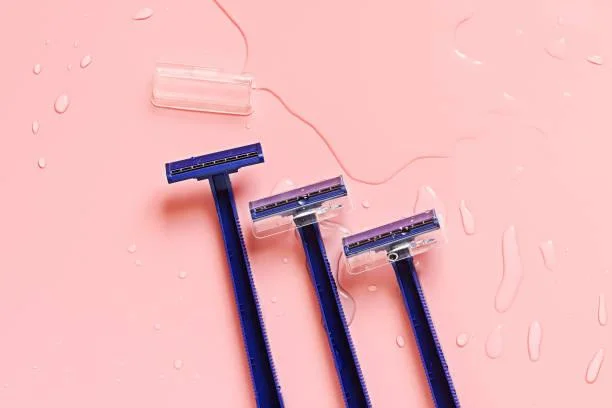
Keep shaving. Shaving cuts at the surface and leaves the root exactly where we need it. You will usually be asked to shave the area the day before or the morning of your appointment, so the energy goes into the follicle rather than burning off surface hair. If you have sensitive skin or get bumps, our shaving routine guide walks through it properly.
Starting in September gives you time to make that switch without a wedding or a holiday forcing your hand.
Aftercare is easier in October than it is in July
After a session your skin is warm and more sensitive for a short period. Standard advice is to avoid heat and friction for around 24 to 48 hours: no saunas, no steam rooms, no hot yoga, no intense workouts, no swimming pools, and nothing heavily fragranced on the treated area. Keep it cool, keep it simple, SPF on anything the sun will see.
Every one of those instructions is easier to follow in autumn than in the middle of a heatwave with a beach day booked. That is not a small thing. Aftercare compliance is one of the biggest differences between a course that delivers and a course that disappoints.
Your therapist will give you aftercare specific to the area treated and how your skin responded. Follow it, and call the clinic if anything looks or feels unexpected.
Start with a consultation and patch test
Every course starts the same way, and it is not with a laser going off.
Your consultation is £50 and it is fully redeemable against your treatment, so if you go ahead, it costs you nothing. Here is what happens:
- We assess your skin, your hair type and the area you want treated.
- We talk through medication, medical history and anything that affects how your skin responds.
- We patch test, then let it settle so we can check the reaction before committing to settings.
- We build a plan with a realistic session count and spacing, and give you a clear cost. No hard sell, no surprise package at the till.
Come with questions. Good ones to ask: how many sessions for my area, how often should I book, what do I need to stop doing, what results are realistic for my hair type, and does anything I take affect treatment. You need a patch test even if you have had laser somewhere else, because our machine and settings are not theirs.
We are open seven days a week, 9am to 9pm, across three clinics: Marylebone Road by Baker Street, our Monument clinic in the City, and Hagley Road in Birmingham. If you work in the Square Mile, our City of London guide explains how a session fits into a lunch break.
Start your course this September at Laser Me Out in Baker Street, Monument or Birmingham. Book your consultation and patch test today.
Frequently asked questions
How many laser hair removal sessions will I need?Most areas need a course of six sessions, spaced according to the area, with occasional top ups afterwards. Coarse or hormone driven hair often needs more. You will get a specific number at your consultation and patch test, not a guess.
If I start in September, will I be finished before summer?For most body areas, yes. Six sessions at six to eight week intervals from September lands your final session around April or May. Results vary by area and hair type, and some areas need maintenance sessions afterwards.
Can I have laser hair removal if I still have a tan?In most cases yes. Our Soprano Titanium includes the Nd:YAG 1064nm wavelength, which is why we treat tanned and melanin rich skin all year round. Always tell your therapist about recent sun, sunbeds or fake tan, since fake tan needs to be fully off the skin before treatment.
Can I wax between laser sessions?No. Waxing, threading, epilating and plucking remove the hair at the root, and the laser needs the follicle intact to work. Shaving is fine and is normally required before each session.
How far apart should face and body sessions be?Face areas are usually treated around every four weeks. Body areas are usually every six to eight weeks, because the growth cycle is slower.
What should I avoid after a session?For roughly 24 to 48 hours, avoid saunas, steam rooms, swimming, hot or intense exercise and heavily fragranced products on the area. Use SPF on treated skin that will be exposed to daylight.
Do I need a patch test before my first session?Yes. Every client patch tests before their first treatment, including clients who have had laser elsewhere, so we can check how your skin responds before selecting settings.
Is the consultation fee refundable?The £50 consultation is fully redeemable against your treatment. If you go ahead with a course, it comes off the cost.
share
interesting article on the same topic
Laser Hair Removal
October 9, 2026
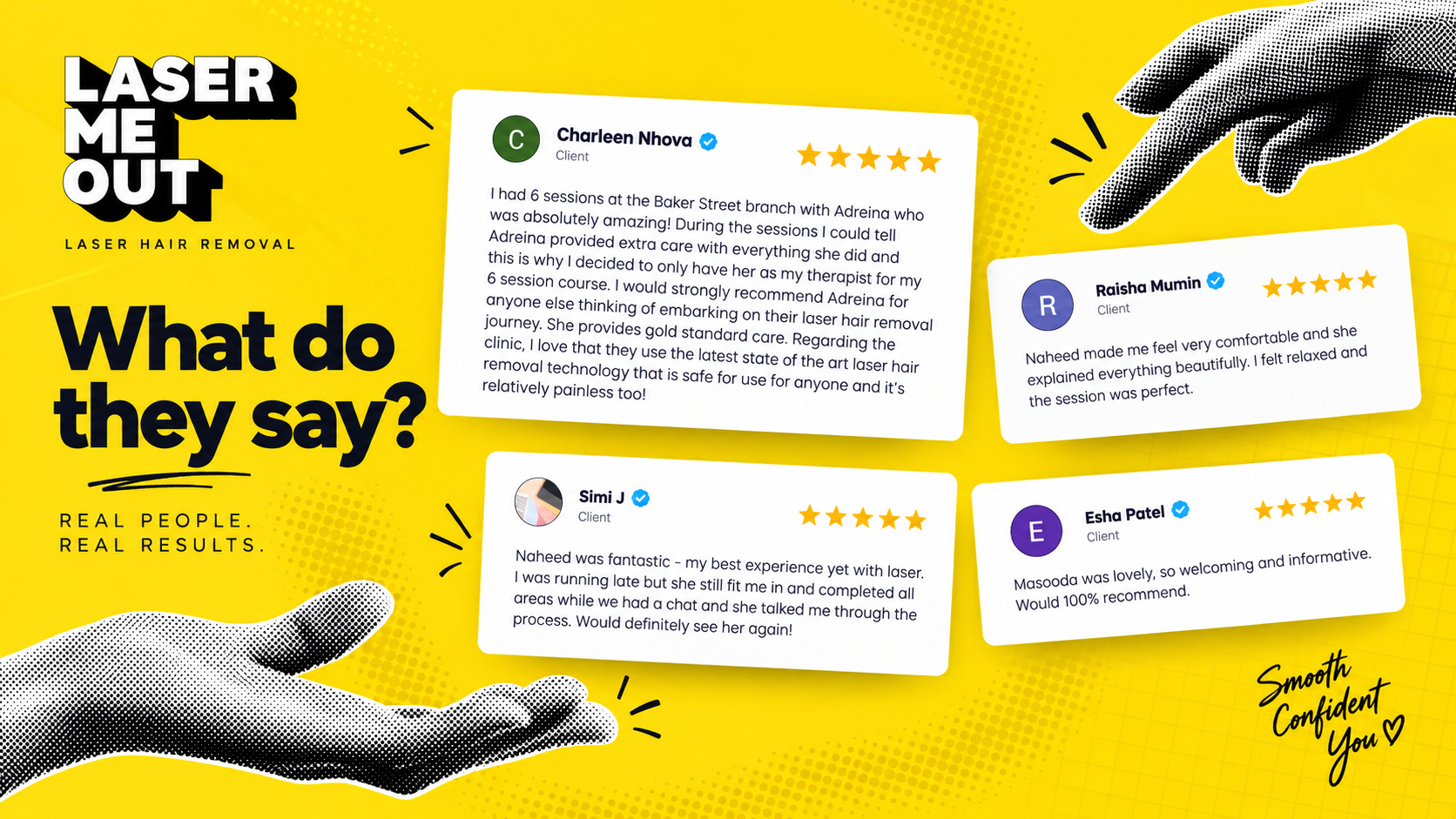
1,000+ Google Reviews: What Our Clients Really Think About Laser Me Out
Thank you for 1,000+ Google reviews. Read what clients say about Laser Me Out, our therapists and their laser hair removal appointments in London and Birmingham.
read more
Laser Hair Removal
September 18, 2026
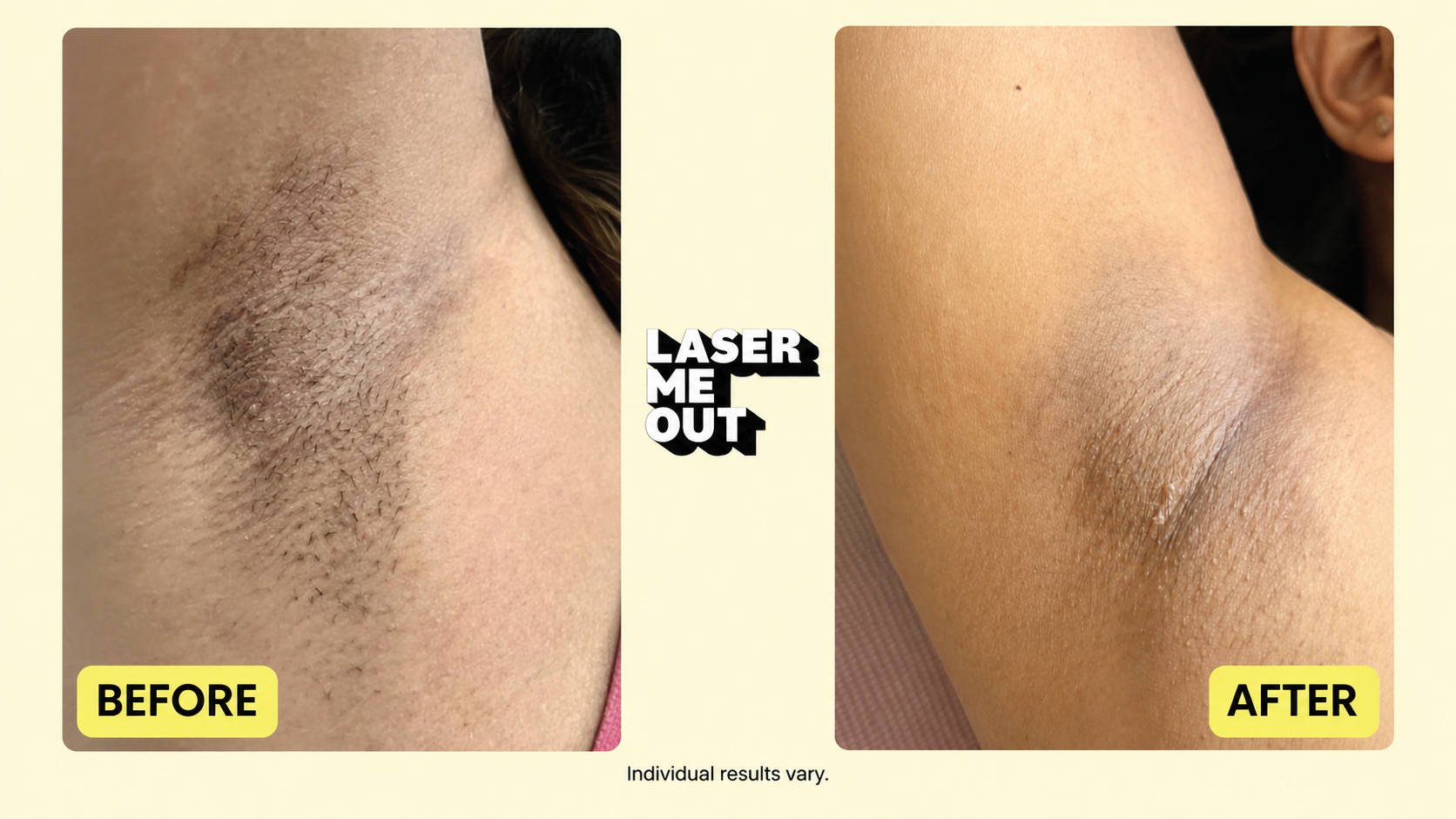
Your Guide to Less Shaving
Learn about underarm laser hair removal and our £450 offer: six sessions on any large area plus six free underarm sessions, with consultation and patch test.
read more
Laser Hair Removal
September 11, 2026

Full Body vs Pick & Mix Laser Hair Removal
Compare Full Body, Pick & Mix and individual laser hair removal courses at Laser Me Out. See September prices for Monument, Baker Street and Birmingham.
read more
Laser Hair Removal
September 4, 2026
.jpeg)
Laser Hair Removal Before Your Wedding
Planning laser before your wedding? When to start, when your final session should be, which areas to prioritise, and why you don't have to wait until winter.
read more
Laser Hair Removal
August 28, 2026
Why September Is the Right Time to Start Laser Hair Removal
Start laser hair removal in September and finish your course before summer. Growth cycles, session spacing, prep and aftercare explained.
read more
Laser Hair Removal
August 21, 2026
.jpeg)
Looking for Laser Hair Removal Near Monument? 7 Things to Check
Comparing laser hair removal near Monument, Bank or Cannon Street? Here are 7 things to check before choosing a clinic, from the laser machine and patch test to therapist experience and location.
read more
Laser Hair Removal
August 14, 2026

Can You Get Laser Hair Removal on Your Lunch Break? A Guide for City of London Workers
Work near Bank or Monument? Find out how laser hair removal fits around your working day, how long appointments take and why we opened Laser Me Out Monument
read more
Laser Hair Removal
August 7, 2026

Laser Hair Removal in Monument and the City of London
Laser Me Out is now open at 36 St Mary at Hill, EC3R 8DU. Soprano Titanium for all skin tones, minutes from Monument, Bank and Cannon Street. Book a consultation
read more
Laser Hair Removal
August 1, 2026
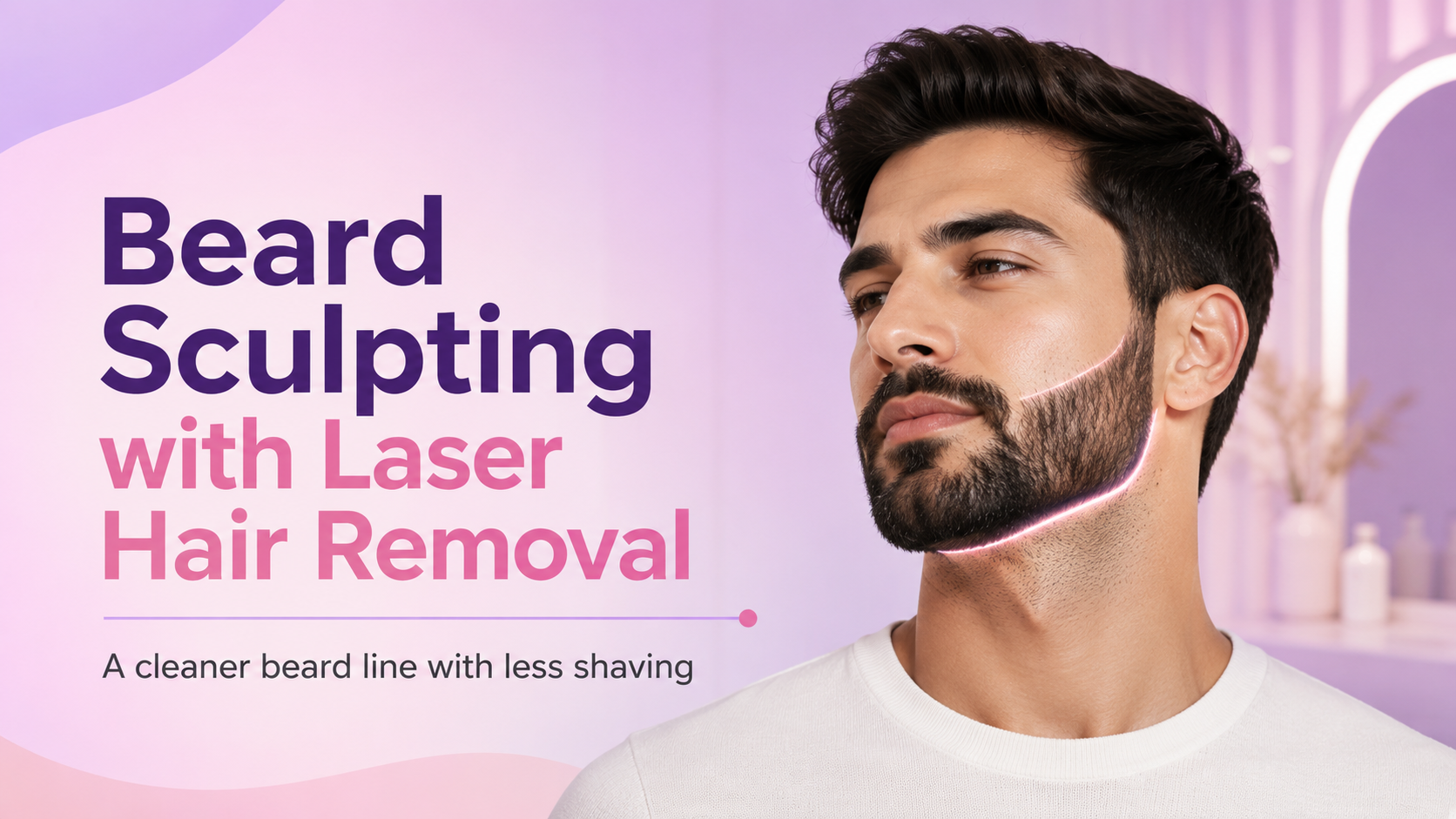
Beard Sculpting with Laser Hair Removal
Laser beard sculpting reduces hair on the neck, cheeks and jaw so your beard line stays sharp without daily shaving.
read more
Laser Hair Removal
July 24, 2026

hollywood-vs-brazilian-laser-hair-removal
Hollywood removes all the hair. Brazilian leaves a strip or shape at the front. Here's exactly what each one covers at Laser Me Out
read more
Laser Hair Removal
July 17, 2026
.jpg)
Why Is a Laser Clinic Selling a Razor?
Laser hair removal reduces the need to shave over time, but shaving is still part of every treatment course. Here is why we made the Laser Razor, how it supports pre-laser prep, and what makes it different from a basic disposable razor.
read more
Laser Hair Removal
July 10, 2026

Why the World's Best Athletes Go Hair-Free And Where They Go to Do It
When World No. 1 Aryna Sabalenka walked into Laser Me Out during Wimbledon fortnight, she confirmed something the sporting world has known for years: for elite athletes, hair-free isn't vanity it's performance
read more
Laser Hair Removal
June 26, 2026
.png)
2026 Pubic Hair Trends: Bush, Brazilian & Bare | Bikini Laser London & Birmingham
The biggest pubic hair trend of 2026 isn't one look it's choice. Bush, strip or bare, here's what's changing
read more
Laser Hair Removal
June 19, 2026
.png)
Best Areas to Laser in Summer | Laser Hair Removal Guide
Can you have laser hair removal in summer? Yes the best areas to treat now, and how to stay sun-safe.
read more
Laser Hair Removal
June 12, 2026
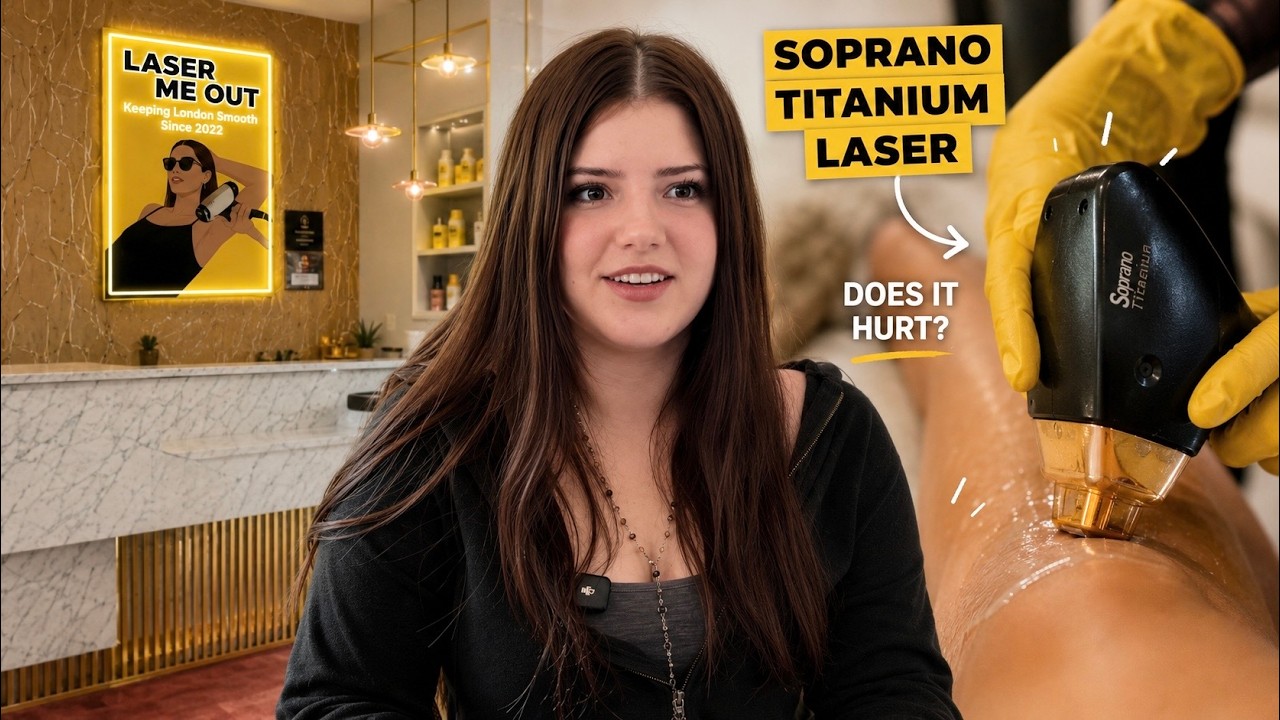
Your First Laser Hair Removal Session: Everything You're Wondering
Googling: does it hurt, is a Hollywood awkward, can you train after, and why your hair "growing back" two weeks later is actually good news.
read more
Laser Hair Removal
June 5, 2026
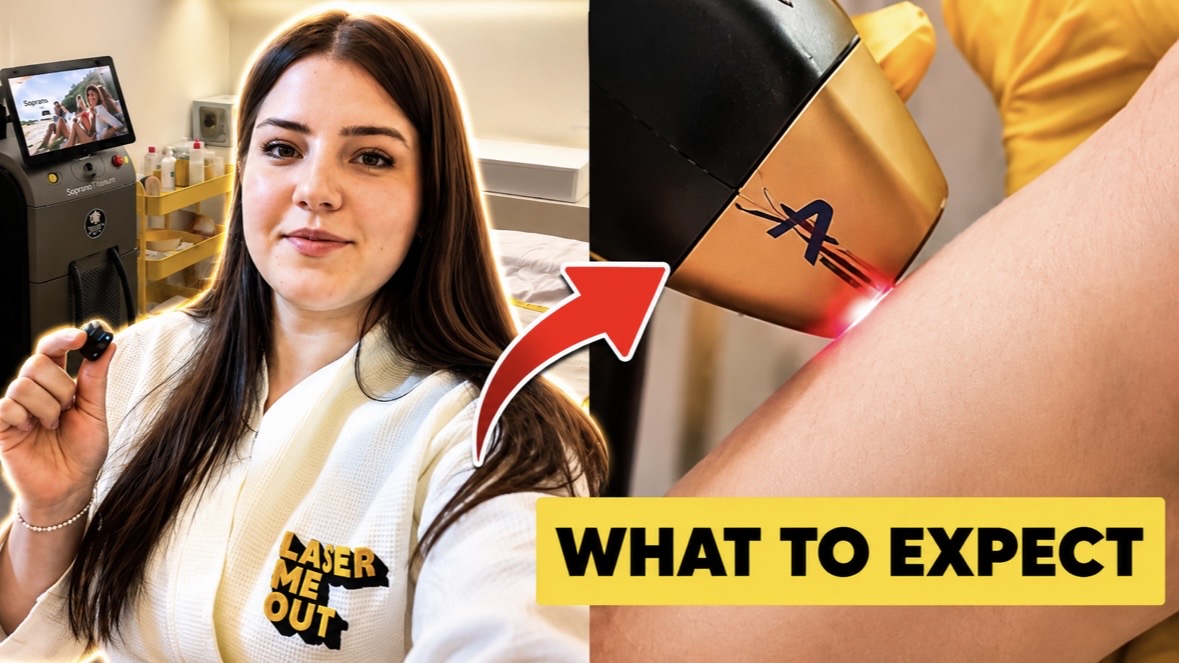
What Really Happens at Your First Laser Hair Removal Consultation: A London First-Timer's Guide
Nervous about laser hair removal? See exactly what happens at your consultation and patch test at our London clinic step by step, with zero surprises.
read more
Laser Hair Removal
May 29, 2026

PCOS, Pregnancy and Laser Hair Removal: Why Hormonal Hair Growth Needs More Support
PCOS, pregnancy and hormone changes can affect hair growth. Here is why Laser Me Out supports hormonal hair with Soprano Titanium, honest advice and flexible treatment plans
read more
Laser Hair Removal
May 15, 2026
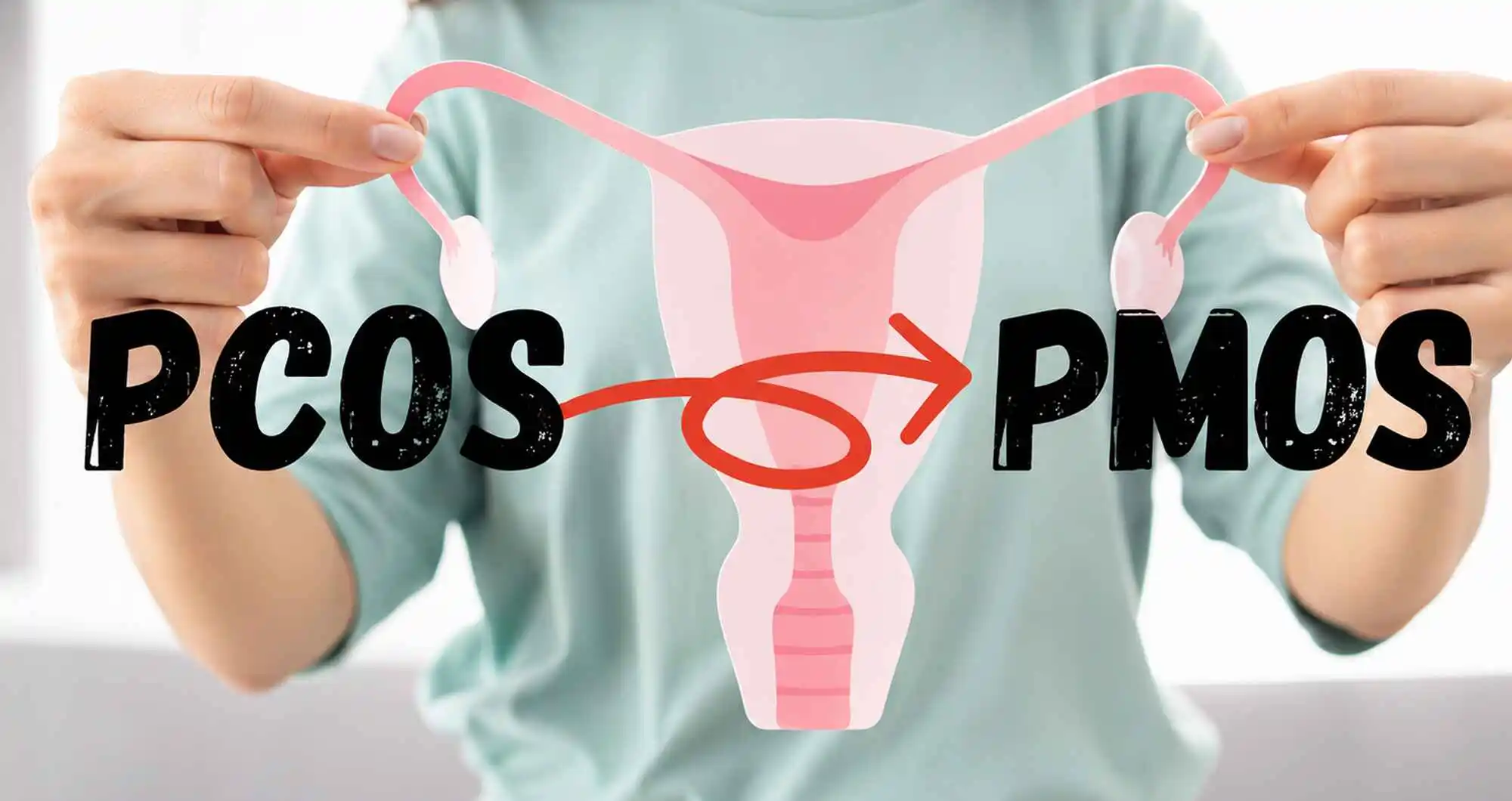
Goodbye PCOS, Hello PMOS: What the Name Change Means for You
PCOS has been officially renamed PMOS. Here's what it means, why it matters, and what to do next whether you're diagnosed or wondering if you should be.
read more
Laser Hair Removal
May 7, 2026

Can Pregnancy Reverse Your Laser Hair Removal? Here's What Really Happens
Did pregnancy undo your laser results? Spoiler: probably not. Laser Me Out breaks down what actually happens to your treated follicles, where all that new hair is coming from, when to restart sessions after baby, and why most mums only need 2–3 top-ups to get back to smooth.
read more
Laser Hair Removal
May 1, 2026
How Many Laser Hair Removal Sessions Do You Need?
Most people need 6–10 laser hair removal sessions. See results by body area, what affects session count, and how LMO's dry brushing prep gets you there faster.
read more
Laser Hair Removal
April 24, 2026
.webp)
Post-Laser Hair Removal Aftercare: What To Do After Your Session
Laser Me Out covering what is normal after laser hair removal, what to avoid, how to look after your skin, and when to contact the clinic.
read more
Laser Hair Removal
April 17, 2026

The Post-Laser Care Guide: From Day 1 to Your Next Session
Think laser hair removal ends when you leave the clinic? Here's what to actually do after — from shedding to skincare, gym to pool, and every mistake to avoid.
read more
Laser Hair Removal
April 10, 2026

Can You Get Laser Hair Removal on Tanned Skin? (Yes Here's How)
Most London clinics say no to laser on tanned skin. At Laser Me Out, we say yes
read more
Laser Hair Removal
March 29, 2026

PCOS Facial Hair: Why Your Chin and Upper Lip Are So Much Harder to Treat
PCOS facial hair is the hardest area to treat with laser here's the real reason why, how many sessions you'll need, and what actually works.
read more
Laser Hair Removal
March 13, 2026
How Many Laser Sessions Do You Need for PCOS?
PCOS laser hair removal takes more than 6 sessions here's exactly why, what happens at each stage, and when to book maintenance. Honest guide from Laser Me Out.
read more
Laser Hair Removal
March 6, 2026

I Started a Laser Clinic Because of My Own PCOS Hair Here's My Story (and What Actually Works)
Laser Me Out founder Shireen has PCOS. Here's her honest story, why laser changed everything, and what PCOS clients need to know before starting treatment.
read more
Laser Hair Removal
February 27, 2026

PCOS Hirsutism Explained Why the Hair Keeps Coming Back
Struggling with PCOS hair growth? Learn why hirsutism keeps coming back and how laser can help reduce regrowth long term
read more
Laser Hair Removal
February 11, 2026

Laser Hair Removal Side Effects — Myths, Facts & FAQs
Worried about laser side effects? We debunk myths and share real safety tips for all skin types.
read more
Laser Hair Removal
February 6, 2026

Hair Removal Myths, Busted
Hair removal myths, debunked. The truth about shaving, waxing, laser, creams, and regrowth, plus how to prep for laser properly.
read more
Laser Hair Removal
January 30, 2026

Is Laser Hair Removal Worth It? Real Costs vs Waxing & Shaving (With Math)
Tired of waxing and shaving? Discover if laser hair removal is worth the cost with a real 5-year price breakdown, expert insight, and long-term benefits.
read more
Laser Hair Removal
January 23, 2026

Why Laser Hair Removal Doesn’t Work for Some People (And What Actually Helps)
Laser hair removal not working? Learn the real reasons (machine, hormones, timing, prep), what to do next, and how to get better results in London. Includes pain, cost, and PCOS guidance.
read more
Laser Hair Removal
January 16, 2026
How to Prevent Strawberry Legs in Winter
Struggling with strawberry legs in winter? Learn what causes them and how to prevent bumps and ingrowns, with expert advice and long-term solutions.
read more
Laser Hair Removal
January 15, 2026

Soprano Titanium vs Other Lasers for Darker Skin Safety & Results
A clear guide to Soprano Titanium vs other laser machines for Asian and darker skin. Real safety notes, comfort differences, and what to expect at Laser Me Out.
read more
Laser Hair Removal
January 2, 2026

Laser Hair Removal Timeline If You Start in January
Starting laser in January? See when results show, when shedding happens, and what to expect after each session.
read more
Laser Hair Removal
December 26, 2025
.webp)
Start now, stay consistent, be ready for warmer weather.
Winter is the easiest time to start laser in the UK. Less sun, fewer tanning plans, and it’s easier to stay consistent. Here’s the 6-session timeline, what to avoid, and how to plan around holidays for better results.
read more
Laser Hair Removal
December 19, 2025
Red bumps on your bum? Here’s what they usually are and how to clear them
Bum spots are common, and they’re not always “acne”. Most of the time, they come from irritated hair follicles, ingrown hairs, friction, sweat, or KP (those tiny texture bumps)
read more
Laser Hair Removal
December 12, 2025
The common shaving mistake that can damage your skin
Using a dull razor can cause razor bumps, ingrown hairs, itch, and dark marks. Here’s how to shave the right way, plus aftercare tips and long-term options.
read more
Laser Hair Removal
December 5, 2025

Laser Me Out is now open in Birmingham
Safe laser hair removal on Hagley Road using Soprano Titanium, with honest plans for all skin tones and hormonal hair.
read more
Laser Hair Removal
November 21, 2025
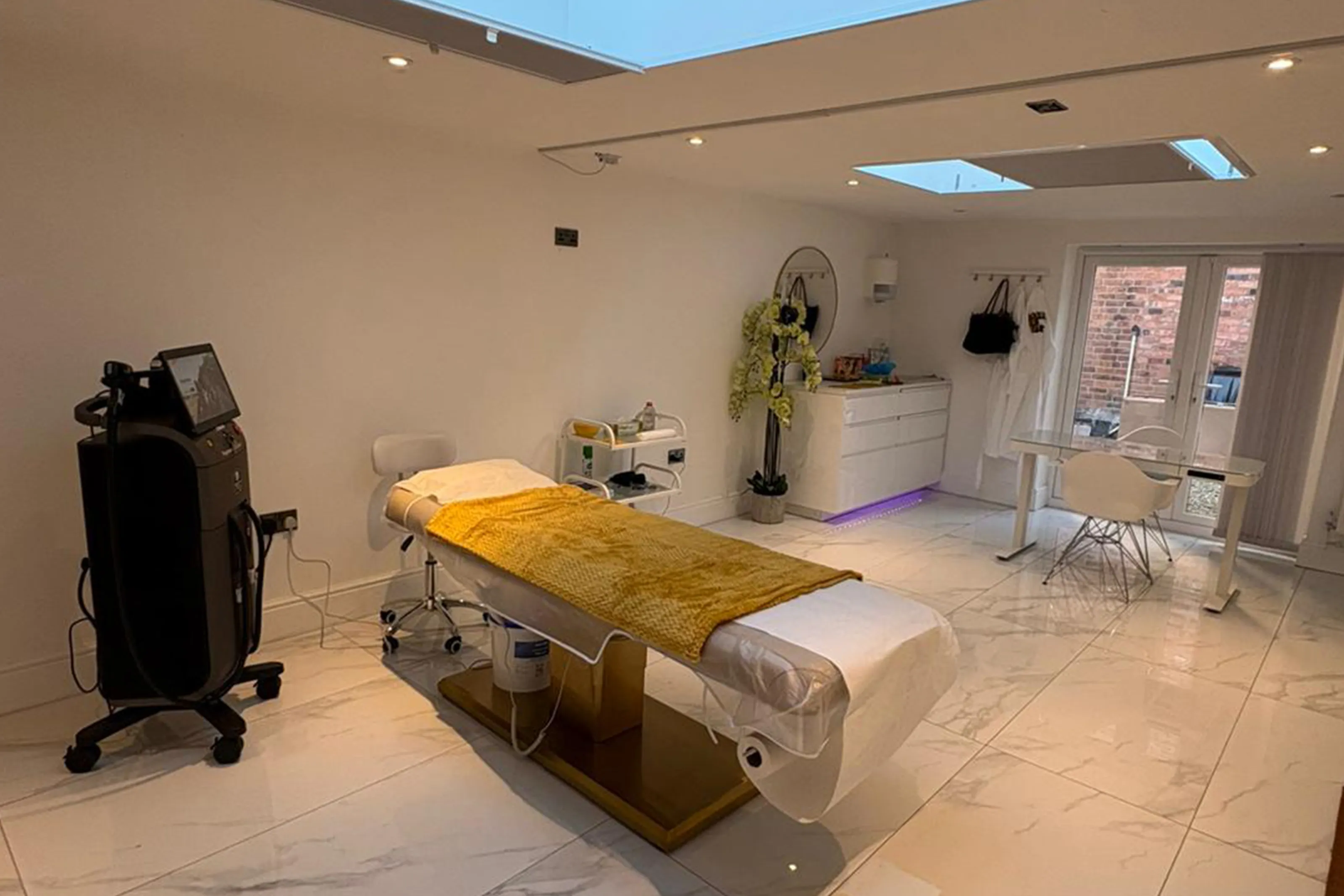
Laser Hair Removal Birmingham on Hagley Road
Laser Me Out has opened on 271 Hagley Road, offering safe laser hair removal for all skin tones. Book a free consultation at our new Birmingham clinic.
read more
Laser Hair Removal
November 14, 2025

Laser Hair Removal in Winter: Why It's the Best Time to Start.
Winter is the best time to start laser. Here’s how to prep your skin for smooth results. Birmingham branch opening soon with our biggest sale of the year. Book your free patch test now.
read more
Laser Hair Removal
October 17, 2025

Does Laser Hair Removal Work for PCOS?
Struggling with hormonal hair from PCOS? Laser Me Out explains how laser hair removal reduces growth safely across all skin tones, with real results and no hype.
read more
Laser Hair Removal
October 3, 2025

Laser Hair Removal Myths Busted Safe, Pain-Free, and Long-Lasting Results
Laser hair removal myths busted safe, pain-free, and effective for all skin tones with Soprano Titanium at Laser Me Out London. Book your consultation today.
read more
Laser Hair Removal
September 26, 2025

What Happens at Your First Laser Hair Removal Consultation
Nervous about your first laser consult? Here’s what happens step by step, from skin check and patch test to plan, safety, and results.
read more
Laser Hair Removal
September 19, 2025

Hollywood laser hair removal: cost, pain, sessions, and what's included
Hollywood laser hair removal in London: cost, pain, sessions, what's included. 6 session (RRP £650). £50 consult redeemable. Soprano Titanium.
read more
Laser Hair Removal
September 12, 2025

Best Laser Hair Removal for Indian Skin (Safe & Effective Options in the UK)
Wondering which laser hair removal works best for Indian skin? Learn why Nd:YAG 1064 is the safest choice, how diode and SHR lasers compare, and what to avoid. Expert guide for Fitzpatrick IV–V skin types.
read more
Laser Hair Removal
September 5, 2025
Laser Hair Removal for Men in London - Does It Work?
Does laser hair removal work for men? Sessions, results, beard line bumps, darker skin safety, aftercare. London clinic answers. Book a free consult.
read more
Laser Hair Removal
August 29, 2025

Men’s Laser Hair Removal London | Back, Chest & Beard Line
Explore men’s laser hair removal in London. Treat back, chest, and beard line, fix razor bumps, and get smooth, gym-ready skin.
read more
Laser Hair Removal
August 22, 2025

Lifetime Laser vs Razors & Waxing: What Really Costs More in the UK
Compare lifetime laser hair removal with razors and waxing. See 5- and 10-year UK costs, pros and cons, myths, and who lifetime packages suit.
read more
Laser Hair Removal
August 15, 2025

Shaving Routine for Sensitive Skin, Eczema and PCOS: Laser-Safe Guide
Learn the best shaving routine for sensitive skin, eczema and PCOS. Step-by-step tips to prevent bumps, soothe irritation, and prep safely for laser hair removal.
read more
Laser Hair Removal
August 8, 2025

Holiday Laser: Is It Safe to Leave the Country Between Sessions?
Planning a holiday during your laser hair removal course? Learn how sun exposure, tanning, and missed sessions affect results, plus timelines for safe treatment before and after your trip.
read more
Laser Hair Removal
August 1, 2025
Complete Guide to Laser Hair Removal for Asian Skin (Fitzpatrick IV–V)
Safe, effective laser hair removal for South Asian and melanin-rich skin. Learn which lasers work best for Fitzpatrick IV–V, what to avoid, and how Soprano Titanium delivers smooth results without the risks.
read more
Laser Hair Removal
July 25, 2025

IPL vs Laser: What's the Real Difference?
Unsure whether at-home IPL or professional laser hair removal is best? Discover what's truly effective, safe, and worth your time and moneynwith insights from Laser Me Out.
read more
Laser Hair Removal
July 18, 2025

Best Laser Hair Removal for Dark Skin in 2025
Discover the safest laser hair removal tech for dark skin in 2025. Learn why older lasers pose risks and why Laser Me Out’s Soprano Titanium ensures safer, faster, and effective results.
read more
Laser Hair Removal
July 11, 2025

Frustrated with Laser Hair Removal Results? Here’s Why It Might Not Be Working
Still seeing hair after laser treatments? You're not alone. Here's why your laser hair removal might not be working and what to do about it. Backed by facts, not fluff.
read more
Laser Hair Removal
July 4, 2025

Laser Hair Removal for Trans Women & Non-Binary Folks
Discover how laser hair removal at Laser Me Out can empower trans women and non-binary individuals by safely reducing unwanted hair, boosting comfort, confidence, and affirming your identity.
read more
Laser Hair Removal
June 13, 2025

Men’s Laser Hair Removal in the UK
Curious about laser hair removal? This 2025 guide covers what UK men need to know—results, comfort, and treating thick hair effectively.
read more
Laser Hair Removal
June 5, 2025

Why Isn’t My Laser Hair Removal Working?
8 reasons why your laser hair removal might not be working and the quick fixes you need! Book your consultation with Laser Me Out today.
read more
Laser Hair Removal
May 30, 2025

How to Shave Your Face Before Laser Hair Removal
Learn how to shave your face before laser hair removal step-by-step tips for everyone!
read more
Laser Hair Removal
May 23, 2025

5 Beginner Tips to Prepare for Your Laser Hair Removal Session
Prep for your laser hair removal with these 5 essential tips for a smooth, confident session! ✨
read more
Laser Hair Removal
May 16, 2025

What’s the Best Laser Hair Removal for South Asian Skin?
Looking for the safest laser for South Asian skin? Discover why Soprano Titanium is ideal for melanin-rich tones — with smooth results.
read more
Laser Hair Removal
May 9, 2025
5 Signs You Might Have PCOS
Learn the 5 key signs of PCOS, including irregular periods, acne, and excess hair growth. Discover symptoms, causes, and support options at Laser Me Out.
read more
Laser Hair Removal
May 2, 2025

Is Laser Hair Removal Safe During Pregnancy? Laser Me Out
Wondering if laser hair removal is safe while pregnant? Get expert advice, safe alternatives, and tips for mums-to-be. Read before your next appointment!
read more
Laser Hair Removal
April 25, 2025

Hair Removal for Redheads: What Actually Works in 2025
Being a redhead is magic – but dealing with body hair shouldn’t be a myth. Here’s how to go smooth in London (without sacrificing your soul or your skin).
read more
Laser Hair Removal
April 14, 2025

Why Laser Hair Removal Isn’t Working – Expert Insight from Cosmo & Laser Me Out
Featured in Cosmopolitan UK, Laser Me Out clears the confusion around laser hair removal. Discover what really works, why results vary, and how expert-led treatments make all the difference.
read more
Laser Hair Removal
April 4, 2025

Hollywood Laser Hair Removal: The Ultimate Guide to Smooth Confidence
Explore Hollywood laser hair removal with Laser Me Out! Permanent, smooth results for just £199. Safe for all skin tones. Book free consultation now.
read more
Laser Hair Removal
March 21, 2025

Bikini Hair Removal Guide | Find the Best Method for You
Discover the pros and cons of shaving, waxing, sugaring, and laser hair removal. Learn how to find the best bikini hair removal method for your skin and lifestyle!
read more
News
March 14, 2025
.webp)
Spring Glow: Say Hello to Smooth, Radiant Skin!
Spring is here, and it's time to refresh, renew, and glow! ✨ Get ready for smooth, hair-free skin just in time for summer with our exclusive March laser hair removal offers. Plus, meet the newest faces at Laser Me Out and discover what makes our expert team special. 💛
read more
Laser Hair Removal
March 8, 2025
Top 3 Popular Laser Hair Removal Areas for Women
Discover the most popular laser hair removal zones for women, from bikini lines to legs, and learn why more women are choosing laser over traditional methods.
read more
Laser Hair Removal
February 27, 2025
Where Is the Most Painful Area for Laser Hair Removal?
Curious about how painful laser hair removal really is? In this guide, we rank the most sensitive areas for laser hair removal, compare pain levels with other hair removal methods, and share tips to minimize discomfort. Learn why laser hair removal is still worth it and how you can prepare for a smoother, less painful experience.
read more
Laser Hair Removal
February 21, 2025
Is Laser Hair Removal Really Permanent? Here’s What You Need to Know
Wondering if laser hair removal results last forever? Discover how it works, what affects permanence, and why maintenance is key for smoother skin. This blog breaks down the science behind laser treatments, the hair growth cycle, and what you can realistically expect from laser hair removal—plus, why Laser Me Out is your top choice in London.
read more
News
February 14, 2025

Double the Love: Everything You Need to Know About Our Valentine’s Laser Offers 💖
This Valentine’s, Laser Me Out offers a Buy One, Gift One Free laser hair removal deal, letting you share smooth, hair-free skin with a loved one. Enjoy discounts like Full Legs Laser (6 Sessions) for £199 and Beard Line Laser (6 Sessions) for £99. Suitable for all skin tones, our pain-free treatments provide lasting results. Offer ends 14th February at 9 PM.
read more
Laser Hair Removal
November 25, 2024

How does Electrolysis help with Menopause?
Menopause refers to a naturally occurring stage in a woman’s life when her menstrual periods cease permanently and she can no longer get pregnant. It is a period of drastic change for women and can affect them in a multitude of ways, leading to disruptions in their daily life. As the effects of menopause are not limited to the physical changes, it can directly influence their mental health and their overall wellbeing.
read more
Laser Hair Removal
November 15, 2024

Laser vs Electrolysis: What’s best for you?
Looking at getting hair removal but not sure which is the best for you? Laser and Electrolysis are the two main hair removal treatments on the market. With the introduction of Electrolysis at Laser Me Out we want to ensure you are fully armed with information to make the best choice for yourself!
read more
Laser Hair Removal
November 5, 2024
Sustainability: Everything We Are Doing to Improve Our Environmental Footprint
Sustainability is at the heart of everything we do. We’re working towards integrating eco-friendly practices into every part of our daily operations, from our treatments to our front desk. Actively committing to making new responsible choices, our team is focusing on creating new ways to implement positive changes that reflect a more sustainable mindset. Together, we’re continuously finding ways to reduce our impact and support a healthier planet.
read more
Laser Hair Removal
October 25, 2024

Winter is best season to start your Laser Hair Removal Journey - Here’s Why
It’s that time of the year again. The days are shorter, nights are longer and the sun is an elusive stranger barely to be seen. While that might not sound like the ideal time for most things, it’s actually the perfect time to start your laser hair removal journey! Why? Let’s break it down.
read more
Laser Hair Removal
October 20, 2024
Why are more men choosing Laser Hair Removal
If you are reading this article, Congratulations! You have taken the first step towards making your life easier. We know you have heard about Laser Hair Removal and are curious to try it too. And why shouldn't you, waxing and shaving are as painful and time consuming for men as it is for women. In fact, men tend to have thicker and coarser hair, often in hard to reach areas. Laser Hair Removal has emerged as a popular alternative to these traditional methods over the last couple of years with more and more men acknowledging the long list of benefits. Let’s get into detail.
read more
Laser Hair Removal
October 15, 2024

Laser Hair Removal - A Detailed Guide for Transgender People
Laser hair removal is an excellent tool for transgender individuals seeking efficient and long term solutions for removing unwanted hair from their body. Whether you are undergoing transition with or without hormone replacement therapy (HRT), laser hair removal can play a crucial role in helping you achieve your desired look and align it more closely with your gender identity.
read more
Laser Hair Removal
October 15, 2024

I Am Trans: Can I do laser hair removal
Laser hair removal is one of the most effective solutions for trans individuals seeking to remove unwanted body or facial hair, especially for those undergoing hormone therapy. Excess hair can significantly impact self-esteem and mental health, and for many in the trans community, areas of concern often include the face, chest, legs, and intimate regions, particularly after Hormone Replacement Therapy (HRT).
read more
Laser Hair Removal
October 10, 2024
Let’s talk Science: How does Laser Hair Removal actually work?
Starting anything new is always challenging, and starting your laser hair removal journey can be particularly daunting for a multitude of reasons. A quick search on Dr. Google and your screen floods with countless options, endless clinics and constantly evolving technology. There are so many questions - Is it painful? Is it going to work on my skin? Will it get rid of the hair permanently? How are these machines different? How does a laser actually work?
read more
Laser Hair Removal
August 19, 2024

My Personal Journey to Tan-Friendly Laser - Embrace Summer with Confidence!
It's summer time! The kids are in school and the sun is shining! Can we all agree that a fresh, sun-kissed tan makes everyone look and feel so good after a holiday? Personally, I love how a tan makes me look radiant and gives me a makeup-free glow.
read more
News
August 19, 2024

Major Clinics Shutting Down: How Can You Trust Paying Upfront for a Course?
Recently, the collapse of the high-street clinic chain SK:N has shocked many. The clinic, with 70 branches across the UK, has abruptly ceased trading, leaving numerous customers and staff in distress. Many individuals are now left out of pocket, waiting for treatments they’ve paid for but not yet received, or unpaid wages. This situation underscores the growing concern about the safety and reliability of paying upfront for cosmetic procedures.
read more
Laser Hair Removal
July 19, 2024
Say goodbye to ingrown hairs and pigmentation
Being young, dumb, and broke, I never used to know much about skincare, scarring, or how to manage breakouts. I never had enough money to start my laser journey and always used to pick my spots and ingrown hairs, which resulted in post-inflammatory pigmentation and textured skin. I always felt ashamed to show my skin at the beach, and it made me feel abnormal compared to my friends, as I had loads of dark marks around my bikini area.
read more
Laser Hair Removal
July 18, 2024

How to Treat Dark Underarms
Growing up, I used to have dark underarms and always thought it was either genetic or a problem with my skin colour in that area. Coming from an Asian family, my mum obviously told me to use lemon and scrubs on them, but that did not help. Shaving and waxing didn’t do the trick either.
read more
Laser Hair Removal
April 8, 2024

So many clinics, countless laser options - how to choose the right one for me?
With so many clinics opening every week and a vast array of laser options available, it can be challenging to know which laser is right for you and which clinic to choose.
read more
Skin
April 8, 2024

Say goodbye to pain with our pain-free laser hair removal!
Are you one of those who shudder at the mere mention of hair removal? If the very thought sends you into a spiral of apprehension, it's time to breathe a sigh of relief.
read more

contact us
let´s talk hair. dm us today.
We’re obsessed with fuzz-free living and love to share our knowledge and expertise. Don’t be shy! Ask us anything.
London´s prime location
Laser all day baby - hours that work for you! Situated at 146 MARYLEBONE Rd., London NW1 5PH
MON
9.00 - 21.00
TUE
9.00 - 21.00
WED
9.00 - 21.00
THU
9.00 - 21.00
FRI
9.00 - 21.00
SAT
9.00 - 21.00
SUN
9.00 - 21.00

Birmingham´s prime location
Laser all day baby - hours that work for you! Situated at 271 Hagley Rd, Birmingham B16 9NB
MON
9.00 - 21.00
TUE
9.00 - 21.00
SAT
9.00 - 21.00